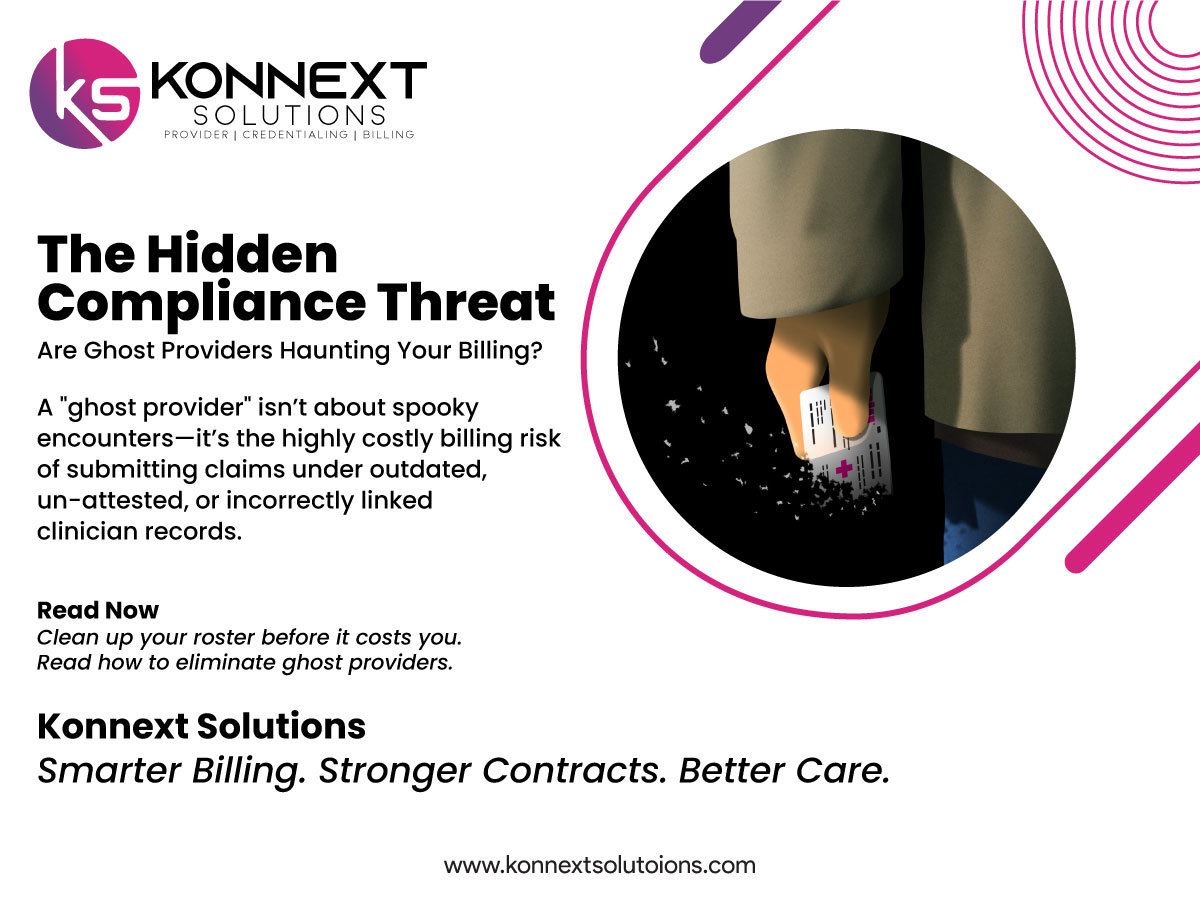
A ghost provider might sound like something out of a horror movie, but in medical billing, it is a very real problem that can lead to claim denials, payment delays, compliance issues, and even fraud investigations.
Many healthcare organizations unknowingly create ghost providers through outdated credentialing records, inactive payer enrollments, or incorrect provider information. These errors can disrupt your revenue cycle and put your practice at unnecessary financial risk.
Here’s what every healthcare provider should know.
What Is a Ghost Provider?
A ghost provider is a healthcare provider whose information remains active in billing systems, payer directories, or practice records even though they are no longer authorized to bill under that profile.
This can happen when a provider:
- Leaves the practice but is not removed from billing systems.
- Has an expired license or credentialing status.
- Is no longer enrolled with a specific insurance payer.
- Has outdated demographic information.
- Is incorrectly linked to claims or patient encounters.
When claims are submitted under an inactive or incorrect provider record, insurance companies may reject or deny payment.
How Ghost Providers Are Created
Ghost providers often result from administrative oversights rather than intentional misconduct.
Common causes include:
Outdated Credentialing Records
If provider recredentialing is not completed on time or CAQH profiles are not maintained, payer records may become inaccurate.
Poor Provider Offboarding
When a physician, nurse practitioner, or therapist leaves a practice, their information should be removed or updated across all billing platforms and payer enrollments.
Incorrect Provider Enrollment
Billing under a provider before enrollment is complete or after enrollment has expired can create billing issues.
System Synchronization Errors
Practice management systems, EHRs, and clearinghouses may contain conflicting provider information if updates are not made consistently.
How Ghost Providers Affect Medical Billing
Ghost provider errors can have serious financial consequences.
Claim Denials
Insurance companies verify provider eligibility before processing claims.
If the provider listed on the claim is inactive or not credentialed with the payer, reimbursement may be denied.
Payment Delays
Claims often require correction and resubmission, increasing Days in Accounts Receivable (AR) and delaying cash flow.
Compliance Risks
Billing under an inactive or unauthorized provider may trigger payer audits or compliance reviews.
Repeated errors can damage a practice’s relationship with insurance companies.
Patient Frustration
Claim denials may result in unexpected patient bills, delayed care, and reduced patient satisfaction.
Warning Signs Your Practice May Have Ghost Providers
Healthcare organizations should investigate if they notice:
- Unexpected provider-related claim denials.
- Providers missing from payer directories.
- Frequent demographic correction requests.
- Credentialing expiration notices.
- Claims submitted under former employees.
- Inconsistent provider information across systems.
Regular monitoring helps identify these issues before they affect revenue.
How to Prevent Ghost Provider Issues
Preventing ghost providers starts with strong credentialing and provider data management.
Best practices include:
- Keep CAQH profiles updated.
- Monitor credentialing and recredentialing deadlines.
- Verify payer enrollment before billing.
- Remove inactive providers immediately after separation.
- Update provider demographics across all systems.
- Perform regular provider roster audits.
- Review payer directories for accuracy.
These proactive steps reduce claim denials and improve billing accuracy.
Why Credentialing Plays a Critical Role
Credentialing is more than obtaining initial payer approval.
Ongoing provider maintenance ensures insurance companies always have accurate information about your providers, including:
- Active licenses
- Board certifications
- Practice locations
- Taxonomy codes
- Group affiliations
- NPI information
Neglecting these updates increases the risk of ghost provider issues and interrupted reimbursement.
How Konnext Solutions Can Help
Managing provider data across multiple insurance companies can be challenging, especially for growing practices.
At Konnext Solutions, we help healthcare organizations:
- Maintain accurate provider credentialing.
- Complete timely recredentialing.
- Update CAQH, PECOS, and NPPES profiles.
- Manage payer enrollments.
- Monitor provider data accuracy.
- Reduce provider-related claim denials.
- Strengthen revenue cycle performance.
Our proactive approach helps practices prevent billing disruptions before they affect revenue.
Final Thoughts
Ghost providers are often the result of outdated credentialing or provider enrollment records, but their financial impact can be significant. From denied claims and delayed payments to compliance concerns, inaccurate provider information creates unnecessary risks for healthcare organizations.
By maintaining accurate credentialing records, regularly auditing provider data, and working with experienced credentialing professionals, practices can protect their revenue cycle and ensure claims are submitted correctly the first time.