
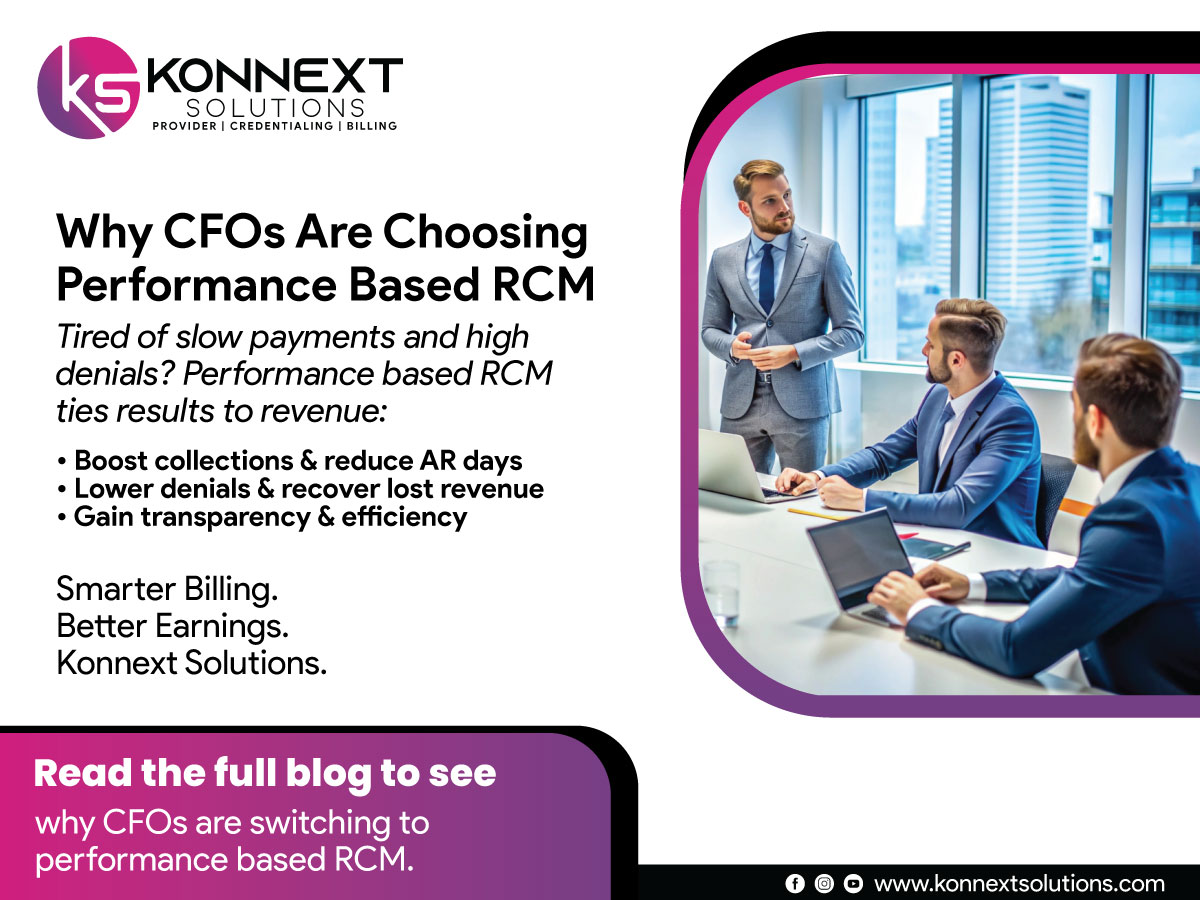
Healthcare finance leaders are under more pressure than ever to protect margins, optimize cash flow, and ensure compliance in a complex payer environment. Traditional revenue cycle management (RCM) arrangements that charge vendors based on a percentage of collections can unintentionally incentivize volume over results. As a result, many organizations find they aren’t capturing all the revenue they’re owed and lack visibility into the financial drivers of their operations.
In response, healthcare CFOs are increasingly turning to performance‑based RCM models, contracts that link vendor compensation directly to improved financial outcomes rather than sheer billing volume. This shift reflects a broader industry emphasis on measurable results, data transparency, and strategic financial operations.
The Limitations of Traditional RCM Pricing
Most conventional RCM vendors charge a flat percentage of gross collections or a fee per claim. While simple to administer, this approach can create a misalignment between the provider’s financial goals and the vendor’s priorities. In many cases:
- Vendors focus on maximizing billing volume.
- Delays in AR and high denial rates go unaddressed.
- Payer underpayments and compliance issues remain undetected.
In contrast, performance‑based RCM prioritizes actual financial health metrics, so the vendor only earns more when your organization collects more. This fundamental difference is a key reason CFOs are rethinking traditional arrangements.
What Performance‑Based RCM Means in Practice
In performance‑based models, compensation is tied to specific, measurable revenue cycle outcomes. Rather than simply processing claims, the RCM partner’s success is tied to outcomes such as:
- Improving Net Collection Ratio (NCR)
- Reducing Days in Accounts Receivable (AR)
- Lowering denial rates and increasing clean claim rates
- Recovering underpayments and payer variances
This approach aligns financial incentives. The RCM partner earns more by delivering real financial improvement—not just by submitting high claim volumes. It also forces continuous process improvement, deeper analytics, and stronger operational collaboration.
Key Benefits Driving Adoption Among CFOs
- Greater Financial Transparency
Performance‑based RCM models require tracking and reporting against clearly defined KPIs, giving finance teams real‑time visibility into financial performance and revenue bottlenecks. This transparency supports better decision‑making and budgeting.
- Stronger Cash Flow and Lower AR Days
Reducing days in AR is critical for liquidity. Performance‑focused vendors prioritize efficient billing, proactive payer follow‑up, and denial management to accelerate cash conversion. Leading RCM providers report measurable reductions in AR and consistent month‑over‑month cash flow improvement.
- Improved Denial Management and Revenue Recovery
Advanced RCM partners employ analytics to identify denial trends, payer underpayments, and systemic clinical documentation gaps. By addressing root causes as well as symptoms, they recover revenue that might otherwise be lost.
- Operational Efficiency Through Technology
Today’s performance‑based RCM relies on integrated systems, automation, and dashboards that connect revenue cycle metrics to clinical and administrative workflows. These technologies drive efficiency, reduce manual errors, and strengthen compliance processes.
- Enhanced Compliance and Risk Mitigation
With regulatory complexity increasing, CFOs need RCM partners who can help guard against audit risk, coding errors, and documentation compliance issues. Performance‑aligned contracts often include shared accountability measures, improving risk protection.
Why This Matters Now
Several broader trends are making performance‑based RCM more practical and valuable:
Regulatory Requirements for Interoperability: Standards such as HL7 FHIR and federal interoperability rules make data more accessible across systems, enabling real‑time KPI tracking that performance models rely on.
Value‑Based Care Emphasis: As reimbursement models shift toward quality and outcomes, financial operations must keep pace. Revenue cycle strategies that reward efficiency and performance are more aligned with the future of healthcare finance.
Competitive Pressure: Practices that optimize RCM performance are better positioned to invest in growth, technology, and patient services. Organizations that lag risk widening financial disparities versus competitors.
What Healthcare Organizations Stand to Gain
When RCM performance is tied to outcomes rather than volume, providers benefit in multiple ways:
- Increased net collections and more predictable revenue
- Faster reimbursement cycles
- Fewer denied and reworked claims
- Higher operational efficiency and staff productivity
- Strategic insights for executive financial planning
These benefits explain why CFOs are pushing for performance‑based partnerships, they deliver measurable operational and financial improvement rather than transactional services.
Conclusion
Performance‑based RCM is not just a billing model; it’s a strategic financial framework that aligns vendor incentives with provider goals. By linking compensation to real results like improved collection rates, reduced AR days, and advanced denial recovery, healthcare organizations gain better visibility, stronger margins, and lower risk.
At Konnext Solutions, we help healthcare providers transition to performance‑aligned revenue cycle operations that drive measurable results. Our model emphasizes transparency, technology integration, and continuous improvement, so your revenue cycle becomes a competitive advantage rather than an administrative burden.
Whether you’re a multi‑specialty group, outpatient clinic, or ASC, a performance‑based RCM partnership can transform how you manage revenue and financial outcomes