
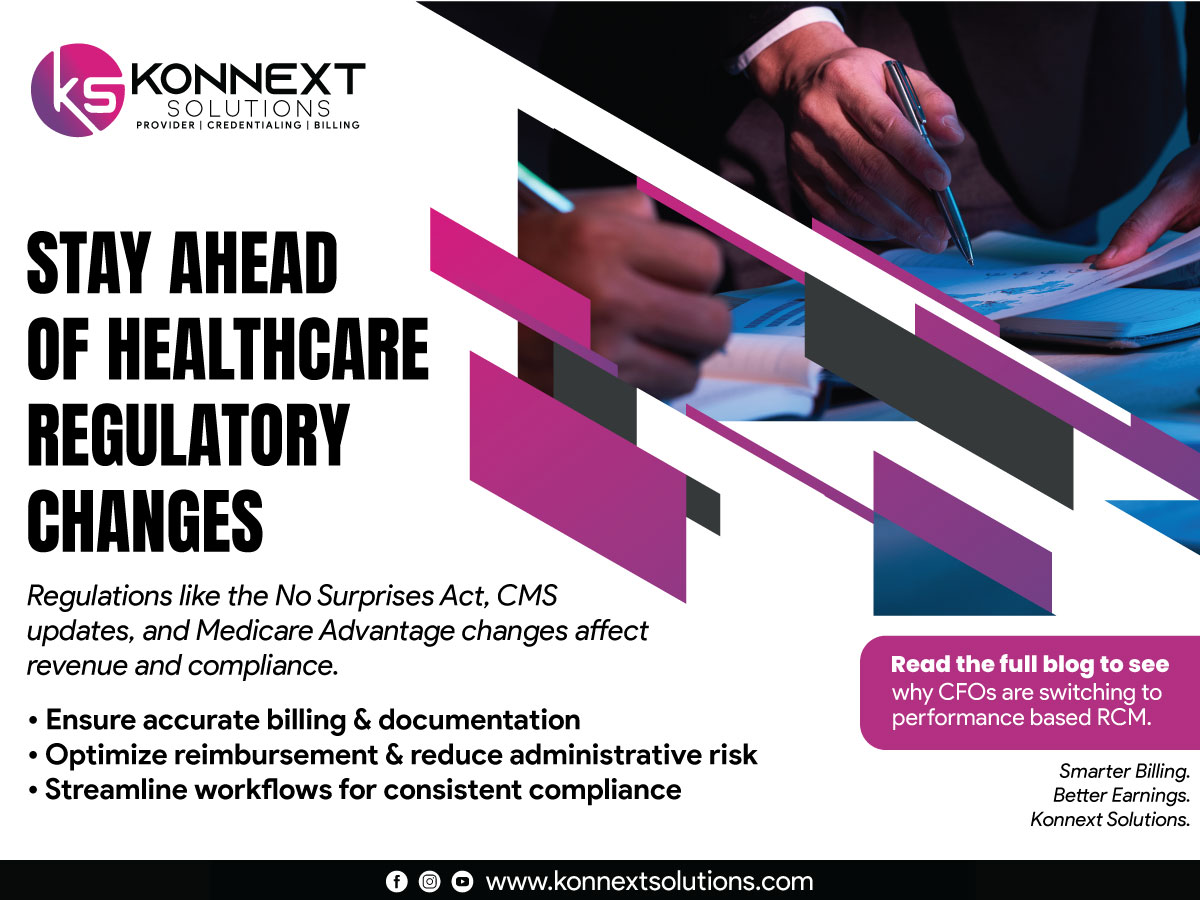
Healthcare policy evolves constantly, and each update can carry significant operational, financial, and compliance implications for medical practices. For many provider organizations, keeping pace with regulatory change has become as critical as clinical care itself.
Instead of viewing regulatory updates as burdensome mandates, practices that build proactive systems are better positioned to protect revenue, streamline operations, and support long‑term growth. This article breaks down key current regulatory developments and offers actionable strategies for effective implementation.
The No Surprises Act: What Providers Need to Know
The No Surprises Act (NSA) remains one of the most impactful healthcare policies in recent years. Designed to protect patients from unexpected bills, especially for out‑of‑network and emergency services, it also introduces new procedural and documentation requirements that directly affect practice operations and revenue cycle workflows.
What Changed Under the NSA
The NSA requires that patients receive clear notice and consent forms before receiving out‑of‑network services. In emergency situations, providers must bill at in‑network rates regardless of network status. Additionally, the Act established an Independent Dispute Resolution (IDR) process to resolve payment disagreements between payers and providers.
These changes shift the operational burden to practices, demanding precise verification, clear communication, and meticulous documentation from front desk registration through billing.
Actionable Compliance Steps
To meet NSA requirements without disrupting workflow, practices should focus on:
- Intake and Verification Enhancements: Confirm network status at multiple points, scheduling, pre‑registration, and check‑in to ensure accurate billing pathways.
- Consistent Patient Communication: Use standardized scripts and acknowledgment forms to educate patients about out‑of‑network costs and required consents.
- IDR Workflow Development: Establish structured procedures for submitting disputes, tracking timelines, and maintaining supporting documentation for each case.
- Billing System Flags: Configure practice management and billing software to automatically flag claims requiring NSA documentation or review.
Proper documentation is especially critical. Practices that implement templates, checklists, and audit trails reduce administrative risk and ensure compliance during retrospective reviews.
Financial Implications
While the NSA strengthens patient protections, it also presents financial complexity. IDR outcomes may delay payments or create uncertainty in revenue forecasting. Practices should incorporate scenario planning into their budgeting processes to maintain stable cash flow despite variability in dispute resolutions.
Understanding CMS Fee Schedule Updates
The Centers for Medicare & Medicaid Services (CMS) publishes annual updates to the Medicare Physician Fee Schedule, affecting reimbursement levels for a wide range of services. These updates translate policy priorities, cost adjustments, and clinical considerations into payment rates that directly impact practice revenue.
The Role of the Conversion Factor
At the heart of Medicare payment changes is the conversion factor, a multiplier that converts relative value units (RVUs) into dollar amounts. Minor adjustments, up or down can materially affect revenue for providers who serve a high volume of Medicare patients.
Some specialties may benefit from increased RVUs for select services, while others could see reductions. The net effect depends heavily on a practice’s service mix and patient demographics.
Assessing Specialty Impact
To understand how fee schedule revisions affect your practice:
- Identify your top revenue‑generating CPT codes.
- Analyze payment changes for those codes compared to the previous year.
- Evaluate which services have grown or contracted in relative value.
This analysis helps practices prioritize operational adjustments and resource allocation.
Practical Response Strategies
Practices can adapt to fee schedule shifts through:
- Service Mix Optimization: Allocate more time and resources to services with favorable reimbursement while maintaining quality.
- Coding and Documentation Accuracy: Ensure coding precision to capture appropriate RVUs and comply with evolving standards.
- Diversifying Payer Mix: Expand participation with commercial payers to reduce Medicare payment concentration risk.
- Exploring Alternative Payment Models: Value‑based arrangements may offer more predictable revenue streams.
Additionally, quality reporting systems, such as those aligned with the Merit‑based Incentive Payment System (MIPS), must be configured to capture required data accurately. Practices should audit and upgrade EHR settings to support compliance and maximize payment opportunities.
Medicare Advantage: Payment Changes and Practice Strategies
Medicare Advantage (MA) plans operate differently than traditional Medicare, with risk adjustment and quality metrics driving compensation. Recent changes in MA methodologies emphasize documentation accuracy and care management, elements that have direct implications for provider revenue.
Risk Adjustment and Quality Incentives
MA plans calculate payments based on member health status, making thorough clinical documentation essential. Chronic conditions and comorbidities must be accurately coded to optimize risk scores and secure appropriate compensation.
Quality bonuses tied to Star Ratings further influence plan performance and provider economics. Higher star scores can unlock shared incentives, while lower scores may result in reduced payments or added administrative burdens.
Contract Negotiation Focus Areas
MA contracting has become more strategic as plans update payment structures. Key areas for negotiation include:
- Risk Adjustment Methodologies: Clarify how documentation impacts compensation and shared savings.
- Quality Targets: Ensure performance expectations are realistic and supported by infrastructure.
- Administrative Fees: Evaluate charges for claims processing, reporting, or care coordination.
- Renewal and Termination Terms: Protect revenue continuity while preserving operational flexibility.
By negotiating terms that reflect risk and reward fairly, practices improve financial resilience under evolving MA frameworks.
Operational Adjustments for Value‑Based Care
As MA plans emphasize outcomes over volume, practices must enhance care coordination and population health capabilities. This includes:
- Developing care management protocols.
- Integrating tools to identify care gaps and follow‑up needs.
- Strengthening patient outreach and engagement practices.
Investing in technology platforms that support these functions, such as advanced EHR analytics and interoperable reporting systems, improves both quality scores and financial performance.
A Roadmap for Implementation
Managing multiple regulatory changes simultaneously requires structure and discipline. Providers should consider a phased approach:
Phase 1: Assessment and Planning
- Perform a comprehensive review of current operations against new regulatory requirements. Identify compliance gaps and prioritize changes based on risk and effort.
- Develop a project timeline that sequences changes logically and allows for necessary staff training and system adjustments.
Phase 2: Process and System Updates
- Update EHR templates, billing rules, and intake procedures to reflect regulatory requirements.
- Provide staff with targeted training and clear job aids to reinforce new workflows.
- Document changes thoroughly and maintain version control for future reference.
Phase 3: Monitoring and Continuous Improvement
- Establish monitoring systems to track compliance metrics and financial performance. Use data to refine processes and address emerging issues proactively.
- Regular review cycles ensure practices stay current with regulatory developments and maintain operational excellence.
Turning Regulatory Challenges into Opportunities
Regulatory changes are often viewed through the lens of compliance burden, but they also present opportunities to strengthen practice operations. Practices that invest in robust workflows, data systems, and documentation standards can see improvements in patient satisfaction, billing accuracy, and financial performance.
At Konnext Solutions, we help practices interpret regulatory updates, implement compliant workflows, and align revenue cycle operations with operational goals. With dedicated expertise and strategic guidance, healthcare organizations can stay ahead of policy changes while optimizing revenue and workflow efficiency.