A recent federal audit is sending a strong message to Medicare Advantage organizations, risk adjustment teams, and healthcare providers across the country: diagnosis coding without adequate documentation can create significant compliance and financial risk.
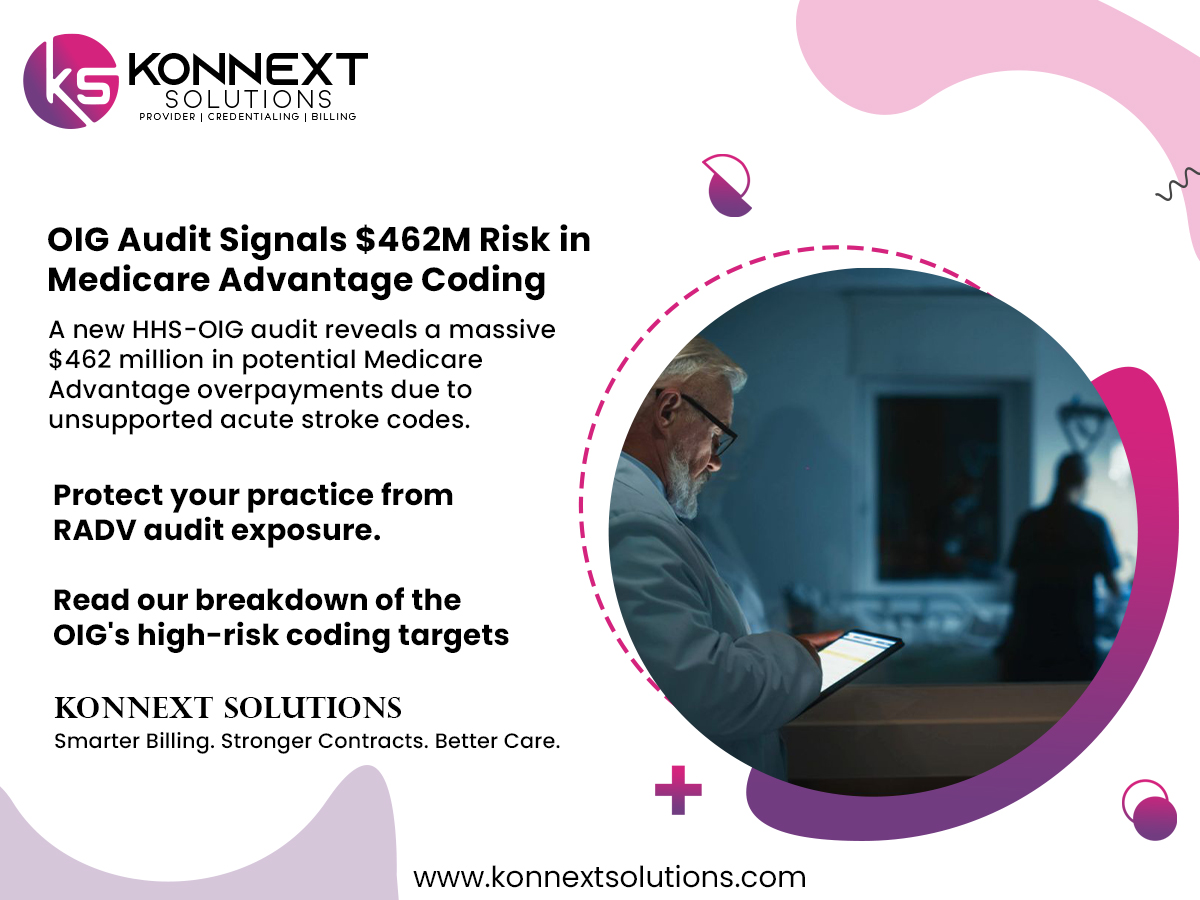
In June 2026, the HHS Office of Inspector General (OIG) released findings showing that certain acute stroke diagnoses submitted for Medicare Advantage risk adjustment purposes may have resulted in approximately $462 million in potential overpayments. While the financial impact is substantial, the larger takeaway is the increased scrutiny being placed on HCC coding accuracy and documentation support.
For organizations participating in Medicare Advantage programs, this serves as a reminder that risk adjustment success depends not only on identifying conditions but also on ensuring every submitted diagnosis is fully supported by the medical record.
Why the Audit Matters
Risk adjustment models are designed to predict expected healthcare costs based on patient health conditions. Diagnoses submitted through the Medicare Advantage program directly influence Risk Adjustment Factor (RAF) scores, which affect reimbursement levels.
According to the audit findings, acute stroke diagnoses were identified on physician-submitted records without corresponding documentation that could validate an active acute stroke event during the same reporting period.
This creates a significant compliance concern because reimbursement under the Medicare Advantage model relies on accurate and supported clinical documentation.
When unsupported diagnoses are submitted, risk scores may be inflated, leading to higher payments than warranted.
Understanding the Compliance Risk
Acute stroke diagnoses carry a higher risk adjustment value because they typically represent complex and costly patient conditions.
If coding teams, providers, or documentation processes fail to validate these diagnoses properly, organizations may face:
- Increased audit exposure
- Potential payment recoupments
- Compliance investigations
- Regulatory scrutiny
- Financial penalties
Importantly, auditors focus on documentation support rather than intent.
Even when coding errors occur unintentionally, unsupported diagnoses can still result in reimbursement adjustments during reviews.
The Growing Importance of RADV Audits
The Medicare Advantage industry continues to face expanding oversight through Risk Adjustment Data Validation (RADV) audits.
RADV reviews are designed to confirm that diagnoses submitted for reimbursement are fully supported by medical records. If a diagnosis cannot be validated, CMS may recover payments associated with those unsupported conditions.
Recent regulatory changes have increased the financial significance of these audits by allowing findings from sample reviews to be extrapolated across larger populations.
As a result, even a limited number of unsupported diagnoses can create substantial repayment exposure.
Key Lessons for Medicare Advantage Organizations
The recent audit highlights several important priorities for compliance and coding teams.
Strengthen Documentation Validation
Every diagnosis submitted for risk adjustment should be backed by clear clinical evidence within the medical record.
Providers should ensure documentation demonstrates:
- Active management of the condition
- Clinical assessment
- Treatment planning
- Ongoing monitoring when applicable
Review High-Risk HCC Categories
Certain diagnoses attract greater regulatory attention because they significantly impact reimbursement.
Examples include:
- Acute stroke
- Heart failure
- Chronic kidney disease
- Diabetes with complications
- Vascular conditions
Organizations should regularly review these categories to identify unsupported documentation before external auditors do.
Improve Provider Education
Many coding vulnerabilities originate at the documentation stage.
Provider education programs should focus on:
- Accurate diagnosis reporting
- Proper documentation standards
- HCC coding requirements
- Audit preparedness
Consistent training reduces compliance risk and improves coding quality.
Implement Internal Audit Programs
Routine internal audits allow organizations to identify documentation gaps before they become regulatory findings.
Effective audit programs should include:
- Concurrent chart reviews
- Retrospective audits
- High-risk diagnosis monitoring
- Coding accuracy assessments
- Provider feedback mechanisms
The Shift Toward Documentation-Driven Compliance
The healthcare industry is moving away from volume-based coding strategies and toward documentation-driven compliance models.
Regulators increasingly evaluate:
- Clinical support
- Documentation quality
- Coding consistency
- Audit defensibility
Organizations that prioritize documentation integrity are better positioned to withstand external audits while maintaining accurate reimbursement.
How Konnext Solutions Supports Compliance Efforts
At Konnext Solutions, we understand that successful risk adjustment programs require more than accurate code selection.
Our team helps healthcare organizations strengthen coding workflows, improve documentation practices, and support compliance-focused revenue cycle management strategies.
Through billing support, coding reviews, provider enrollment assistance, and compliance-conscious operational processes, we help practices reduce risk while maintaining reimbursement integrity.
Final Thoughts
The OIG’s recent findings highlight a broader industry trend: regulators are paying closer attention to the relationship between documentation and reimbursement.
For Medicare Advantage organizations, providers, and coding teams, now is the time to evaluate internal processes, review high-risk diagnoses, and ensure documentation standards align with current regulatory expectations.
Accurate coding remains important. Defensible documentation is what ultimately protects reimbursement.